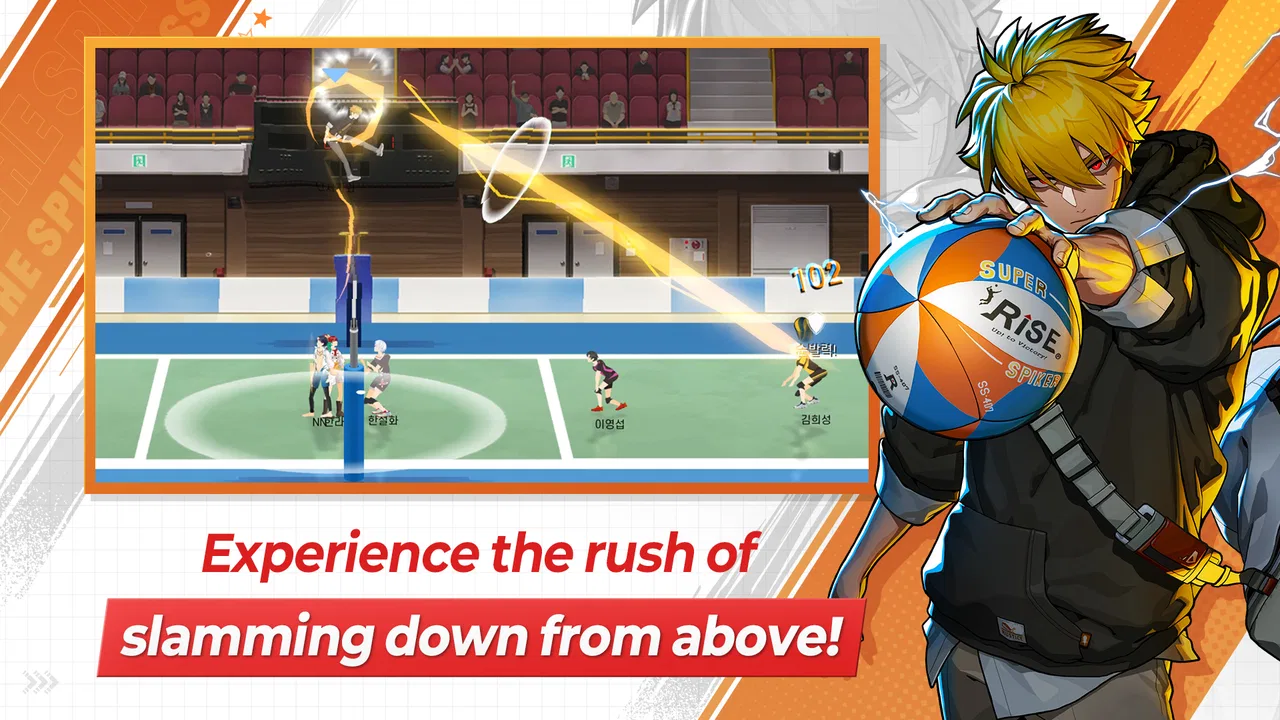
The Spike Cross - Volleyball
- 4.5
- Rating
- 50.00M
- Installs
- Free
- Price

 Analysis by App-foxy
I spent time with The Spike Cross as a quick-match volleyball game, and the feature that shaped my opinion most was its player-controlled timing. Rather than treating volleyball as a simple tap-to-score activity, it asks me to read the rally, move into position, and choose the right moment for actions such as attacking or defending. That single focus gives the game more personality than many casual sports titles, but it also means the experience depends heavily on whether you enjoy learning a demanding control rhythm.
Developed by SUNCYAN, this free sports game is built around volleyball rather than a broad collection of unrelated events. Its store summary points to a connection with an actual volleyball club player, and I can feel that intention in the way rallies are presented: the satisfying moments come from anticipation and timing, not from simply pressing a button repeatedly. The game is rated Everyone 10+, and it is available for Android devices running at least version 6.0 of the operating system.
Why timing is the real heart of the game
I find the appeal of a timing-focused volleyball game easier to judge once I stop expecting every exchange to be a quick attack. This section looks at how small decisions—where I move and when I commit—give the rallies their shape, before turning to how that rhythm feels from one contact to the next.
You May Also Like

 Google Keep - Notes and lists
Google Keep’s Quiet Growth Shows the Appeal of Simpler Notes
As mobile work gets busier, Google Keep keeps winning a simple contest: capture a thought quickly, find it later, and get on with the day.

 Blood Strike: 2.5 Anniversary
Blood Strike’s Loadouts Turn Every Drop Into a Tactical Gamble
A close look at Blood Strike’s custom loadouts: how fast access to signature weapons reshapes its battle royale rhythm, rewards preparation, and narrows the gap between fights.

 Pandora - Music & Podcasts
Pandora’s Music Is Easy to Start, but Harder to Recover
Pandora’s strength is its low-effort path from a seed to a station. Its weak spot is how much confidence it asks you to place in connection, setup, and quiet recovery.

 8 Ball Pool
 Is Built on Rivalries, Rematches, and Routine
A close look at the rivalries, rematches, shared routines, and unanswered safety questions that turn a quick pool match into a persistent mobile community.

 Samsung Music
’s Quiet Strength Is Playing What You Already Own
Its reach comes less from spectacle than from dependable access to a personal library. That simplicity is both the app’s strongest retention engine and its ceiling.

 AccuWeather: Weather Radar
AccuWeather Review: A Quick, Clear Forecast for Everyday Decisions
For everyday plans, the best forecast is the one you can understand quickly. AccuWeather makes rain timing, radar, and local conditions easy to act on, with a few trade-offs.
More From Our News Desk



Reading the rally instead of chasing the ball
The most important skill here is not memorizing a long list of commands. It is learning to read what is about to happen. When I move too early, I can lose the ideal position. When I wait too long, the chance to make a useful play disappears. That creates a small but meaningful decision before every contact: should I prepare for the next attack, cover a possible return, or stay ready to react?
This makes each rally feel more personal than the usual arcade volleyball exchange. In many mobile sports games, the outcome can feel almost automatic once the correct menu or gesture is selected. Here, my input matters more because the same action can feel effective or disappointing depending on where I am standing and when I use it. A well-timed play gives immediate feedback, while a rushed one makes the mistake easy to understand.
The practical lesson is to treat positioning as part of the attack, not as a separate movement phase. I get better results when I begin preparing before the ball reaches the final contact point. Waiting until the last instant may look reactive, but it often leaves too little room to correct a poor angle or late approach.
Why the controls take practice
The game is approachable at first, yet it is not completely effortless. New players can understand the basic objective quickly, but consistent success requires attention. I had to stop thinking of every rally as an opportunity to attack immediately. Sometimes the better choice was to stay controlled, observe the return, and prepare for the next exchange.
That learning curve is one of the reasons the game feels more rewarding after several sessions. Early mistakes are not always caused by bad luck. They often reveal that I moved before understanding the ball’s path or used an action without enough preparation. Once I started identifying those patterns, improvement felt earned rather than handed to me.
The limitation is equally clear: anyone looking for a completely relaxed, one-handed time filler may find the concentration tiring. The game works best when I can give a match my attention. It is less satisfying when I am distracted, commuting, or trying to play while doing something else, because a brief lapse can change the entire rally.
A volleyball game with a narrower purpose
The Spike Cross is not trying to replace a full console volleyball simulation. Its appeal comes from making a focused volleyball match playable on a phone. That distinction matters when comparing it with other sports games. A broad arcade package may offer more sports, more modes, or a simpler pick-up-and-play structure, while this title gets more value from concentrating on the exchange between movement, timing, and contact.
I prefer that focus when I want to improve at one specific kind of challenge. If I want a long management layer, a detailed career experience, or a large variety of sporting activities, another game would probably suit me better. This one is strongest when the central rally is enough to keep me engaged.
How the timing works in everyday play
In everyday play, timing is less about tapping as fast as possible and more about leaving myself room to react. I’ll explain how slowing down can make a rally easier to read, and why a simple habit of noticing what went wrong can be more useful than repeating the same move. That leads into the kind of break where this game feels most at home.
The first few matches
My first useful adjustment was to slow down. The temptation is to make something happen immediately, especially after receiving the ball. That approach produced more errors than points. Once I gave myself a moment to see the developing play, I could make decisions with a clearer idea of where the next contact would occur.
I also found it helpful to separate movement practice from scoring practice. During early matches, I focused less on winning every exchange and more on reaching the ball without panicking. This made it easier to recognize how my position affected the next action. After that became familiar, I could concentrate on turning a good position into a stronger attack.
That workflow is useful for beginners because it avoids trying to master everything at once. A player who keeps losing may benefit from asking one simple question after each failed rally: was the problem my position, my timing, or my choice of action? The answer usually points to a more productive adjustment than simply playing faster.
A smarter short-session routine
For everyday use, I would play in short focused blocks rather than rushing through a long sequence of matches. A few rallies spent observing the opponent’s pattern can be more valuable than repeatedly forcing the same attack. I like using the opening part of a session to regain the timing, then becoming more aggressive once my reactions feel settled.
This is also where the game fits well into a normal day. If I have a short break, I can play a match or two without needing to commit to a large open world or a complicated preparation screen. But the short-session format does not make the gameplay mindless. Even a brief match can demand enough concentration to feel like an activity rather than background entertainment.
One practical tip is to avoid judging the game by a single frustrating session. Timing-based controls can feel unusually harsh when I am tired or distracted. Returning later often makes the same situations easier to read. That is not a flaw unique to this title, but it is especially noticeable here because the main feature depends so directly on player attention.
What makes a successful rally satisfying
The best moments arrive when several small decisions line up. I move early enough to reach the right area, wait instead of committing too soon, and then choose an action that matches the developing play. The reward is not only the point itself. It is the feeling that I understood the rally before it finished.
That clarity is the game’s strongest design quality. It turns a successful exchange into useful feedback. I can usually tell why a play worked, which encourages me to repeat the process rather than rely on random button presses. In a mobile sports game, that kind of readable cause and effect is more important to me than a large number of decorative options.
The best scenario for playing
I think this game is at its best when I can give a match a few minutes of proper attention, rather than trying to fit it into a distracted moment. The next section considers a realistic short-break routine and who might enjoy that focused challenge, before weighing what the game gains—and gives up—by keeping volleyball at the center.
A focused break rather than background play
The ideal situation is a short break when I want something active but contained. For example, if I have a few minutes between tasks, I can start a match, concentrate on the rally, and stop without needing to remember a complicated story or a large map. The game gives that break a clear purpose: improve my timing, test a decision, and see whether I can handle the next exchange more cleanly.
It also suits players who enjoy gradually sharpening a skill. I do not need to be a volleyball expert to begin, but a basic interest in the sport helps because the game’s appeal comes from anticipating play. Someone who enjoys the rhythm of serving, receiving, setting up an attack, and defending will probably understand the attraction quickly.
For younger players, the Everyone 10+ rating gives families a useful general guide, although I would still consider the child’s tolerance for competitive pressure and any spending features before handing over a device. The game is free to start, but optional purchases range from $0.49 to $77.99 per item. That makes it sensible to review purchase settings before letting a child play independently.
When it works better than a larger sports game
I would choose this over a broader sports title when I want volleyball to be the main event. The focused design means I spend less time navigating unrelated systems and more time reacting to rallies. That is valuable for someone who wants a direct sports challenge rather than a large package of activities.
It can also be a better fit than a very simple tap-based volleyball game for players who quickly lose interest in automatic outcomes. The extra demand creates room for improvement. A beginner can play casually, while a more committed player can focus on anticipation and consistency.
When another option is the better choice
I would skip it if my priority were passive entertainment. The game asks me to participate in the exchange, and that requirement does not disappear just because the match is short. Players who prefer management, collecting, or watching a simulated result may find the hands-on timing less appealing.
I would also look elsewhere if I wanted a realistic simulation with extensive team administration or a deep offline career structure. The strength here is the playable rally, not a promise of being every kind of volleyball experience at once. Choosing it for the wrong reason could make its focused design feel limited.
The tradeoffs behind the focused design
A focused design makes it easier to get straight to the rally, but it also narrows the reasons to keep playing: the enjoyment depends on whether I want to improve at this particular kind of exchange. I’ll look at that tradeoff alongside the practical question of free access and optional spending, then consider which players are most likely to find the learning curve worthwhile.
Free access, with spending discipline required
The game costs nothing to download, which makes it easy to test whether the controls suit me. That is a real advantage because timing-based gameplay is personal: some players enjoy the learning curve, while others find it too demanding. I can discover which group I belong to without paying at the start.
The tradeoff is the presence of in-app purchases. The wide range between the smallest and largest listed items means I would not treat the game as entirely cost-free in practice. I can enjoy the basic experience without assuming that every optional progression choice is necessary, but I would keep a clear spending limit if I were tempted to accelerate progress or customize my experience.
My advice is to play enough matches to decide whether the core rally is enjoyable before considering any purchase. If the timing itself is not fun, spending will not solve that problem. If the timing is fun, there is also no reason to rush into purchases before understanding how far the free experience takes me.
Popularity does not remove the learning curve
The game has an average rating of 4.5 from around 689 thousand ratings, with more than 50 million installs. Those figures show that it has reached a large audience and that many players respond positively to its approach. They do not change the fact that my own enjoyment depends on whether I like active, timing-sensitive play.
That distinction is important for expectations. A popular game can still feel uncomfortable during the first sessions, especially when its best qualities emerge through practice. I would not recommend judging it solely by how quickly it delivers easy wins. Its more lasting appeal comes from understanding why a rally succeeded or failed.
Device age and practical expectations
The minimum operating-system requirement is Android 6.0, so the game is accessible on a wide range of Android devices. Even so, the experience may feel more comfortable on a phone with responsive controls and a display that makes the action easy to follow. Timing-based play is sensitive to how clearly I can see the developing rally and how confidently the device responds to input.
The current version is 7.2.110, and I would keep the installation updated through the normal app store process. Staying current is particularly sensible for a competitive game because changes to balance or stability can affect how matches feel. I would also leave enough storage and close distracting apps if my phone is older, not because the game is inaccessible, but because interruptions are more damaging when every moment matters.
Who gets the most from this game
The most satisfied players, in my view, are those who enjoy spotting a mistake and testing a better response in the next rally. This section brings together the game’s strengths and limits for different kinds of mobile sports fans, so the closing recommendation can be specific rather than treating one style of play as right for everyone.
Players who enjoy learning through repetition
The strongest audience is made up of players who like a skill to become clearer over time. If I enjoy replaying a situation and trying a slightly earlier movement or a more patient response, the game gives me a reason to continue. Improvement is visible in the quality of my decisions, not only in a progress number.
Volleyball fans should also find a natural entry point here, especially if they value rally structure over a large amount of presentation. The game’s identity is easy to understand: get into position, read the exchange, and make the contact count. That compact loop is its advantage.
Players who want a mobile-first sports challenge
I would recommend it to someone who wants a sports game that can fit around a busy schedule but still asks for genuine attention. It is more involved than a disposable tap game, yet less demanding in commitment than a large console-style sports package. That middle ground is where it makes the most sense.
It is also a good choice for someone who enjoys discovering personal mistakes. The game gives me enough control to feel responsible for many outcomes, which makes practice meaningful. If I lose because I misread the rally, I have a concrete thing to work on in the next match.
Players who should think twice
I would caution anyone who dislikes repetition, competitive pressure, or touch controls that require precise timing. The same central strength can become the main source of frustration. A player seeking immediate power and effortless scoring may prefer a simpler arcade alternative.
I would also suggest caution for families concerned about accidental spending. The game is free, but the listed purchase range includes expensive individual items. Setting device-level purchase protections is a sensible step before allowing unsupervised play.
My final take after playing
The Spike Cross succeeds because it commits to one meaningful capability: making my timing and positioning matter during a volleyball rally. That focus gives it a clearer identity than a generic sports game, and it creates satisfying moments when I correctly read a play instead of merely selecting an attack.
It is not the right choice for every mobile player. The controls reward patience, and the learning curve can make casual sessions feel more demanding than expected. The purchase options also mean “free” should be understood as free to start, not as a guarantee that every optional path has no cost.
Still, I would recommend it to anyone who wants a volleyball game built around active decisions. Start with short sessions, concentrate on positioning before chasing points, and treat mistakes as timing lessons rather than random failures. If that style sounds enjoyable, SUNCYAN’s focused approach is worth trying, especially since the game is available at no upfront price and has already built a large player base.
My honest verdict is that this is best viewed as a compact skill game with a volleyball setting, not as a complete sports-management package. When I want a quick match that rewards attention and gradually improves my reactions, it is a strong fit. When I want relaxation, extensive simulation, or a broad variety of sports, I would choose something else.
FAQs for The Spike Cross - Volleyball
01What is The Spike Cross - Volleyball and what can I expect from it?
The Spike Cross - Volleyball is an engaging sports simulation game that brings the excitement of volleyball to your mobile device. Players can expect realistic gameplay, dynamic graphics, and a variety of modes including tournaments and quick matches. It's designed to offer an immersive experience whether you're a casual player or a volleyball enthusiast.
02Is The Spike Cross - Volleyball free to play?
Yes, The Spike Cross - Volleyball is free to download and play. However, it offers in-app purchases for players who wish to enhance their gaming experience. These purchases can include items like special equipment, additional player costumes, or ad-free gameplay, providing options for customization and convenience.
03What are the system requirements for The Spike Cross - Volleyball?
The Spike Cross - Volleyball is available for both Android and iOS devices. For Android, it generally requires version 5.0 or higher, and for iOS, version 11.0 or later is recommended. It is advisable to have a stable internet connection for online features and ensure your device has sufficient storage space for seamless performance.
04Does The Spike Cross - Volleyball offer multiplayer options?
Yes, The Spike Cross - Volleyball includes multiplayer options, allowing players to compete against friends or other players worldwide. This feature enhances the competitive aspect of the game, providing a platform for players to showcase their skills and engage in thrilling volleyball matches.
05Are there any tutorials or guides available for new players?
The Spike Cross - Volleyball offers a comprehensive tutorial for new players, guiding them through the basic controls and mechanics of the game. Additionally, there are in-game tips and a help section for players seeking further guidance. This ensures that even beginners can quickly become proficient and enjoy the game to its fullest.
Pros
- Smooth and intuitive controls enhance gameplay.
- Engaging storyline adds depth to matches.
- Variety of game modes keeps it exciting.
- Realistic graphics improve the visual experience.
- Multiplayer option for competitive fun.
Cons
- Occasional in-app ads can be intrusive.
- Limited character customization options.
- Requires internet for certain features.
- Some levels may feel repetitive.
- Initial loading times are slightly long.

The Spike Cross - Volleyball
Gallery